| |
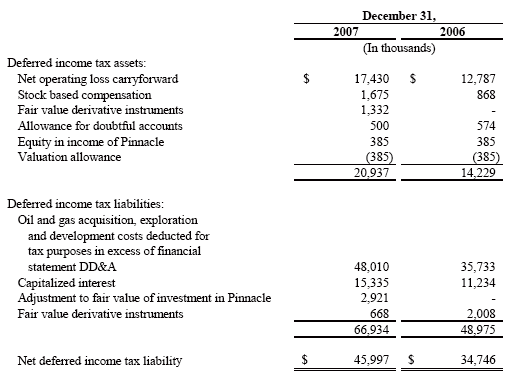
Deferred income taxes result from temporary
differences in the recognition of income and expenses for financial
reporting purposes and for tax purposes. At December 31, 2007 and
2006, the tax effects of these temporary differences resulted principally
from the following:
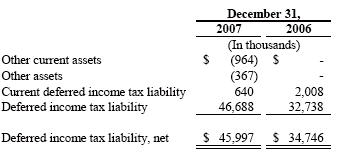
At December 31, 2007 and 2006, the net deferred
income tax liability is classified as follows:
The realization of deferred tax assets is
dependent on the Company’s ability to generate taxable earnings
in the future. The Company believes it will generate taxable income
in the NOL carryforward period. As such management believes that
it is more likely than not that its deferred tax assets other than
the deferred tax asset attributable to Pinnacle will be fully realized.
A full valuation allowance has been established for the equity in
loss of Pinnacle’s tax asset as the realization of the deferred
tax asset is dependent on generating sufficient taxable income in
Pinnacle in future periods, which management believes is unlikely.
The Company has a net operating loss carryforward totaling approximately
$51.2 million, which is scheduled to expire over a period from 2009
through 2027.
On January 1, 2007, the Company adopted
FASB Interpretation No. 48, “Accounting for Uncertainty in Income
Taxes – an interpretation of FASB Statement No. 109” (“FIN 48”).
FIN 48 prescribes a measurement process for recording in the financial
statements uncertain tax positions taken or expected to be taken
in a tax return. Additionally, FIN 48 provides guidance regarding
uncertain tax positions relating to derecognition, classification,
interest and penalties, accounting in interim periods, disclosure
and transition. The Company classifies interest and penalties associated
with income taxes as interest expense. At December 31, 2007, the
Company had no material uncertain tax positions and the tax years
2003 through 2006 remained open to review by federal and various
state tax jurisdictions.
|
|