|
associated with the repriced options totaling $2.6
million ($1.7 million, net of tax) was reclassified to shareholders’
equity during the first quarter of 2006.
The Company uses the Black-Scholes option
pricing model to compute the fair value of stock options, which
requires the Company to make the following assumptions:
| • |
The risk-free interest
rate is based on the five-year Treasury bond at date of grant. |
| • |
The dividend yield
on the Company’s common stock is assumed to be zero since
the Company does not pay dividends and has no current plans
to do so in the future. |
| • |
The market price volatility
of the Company’s common stock is based on daily, historical
prices for the last three years. |
| • |
The term of the grants is
based on the simplified method as described in Staff Accounting
Bulletin No. 107. |
In addition, the Company estimates
a forfeiture rate at the inception of the option grant based on
historical data and adjusts this prospectively as new information
regarding forfeitures becomes available.
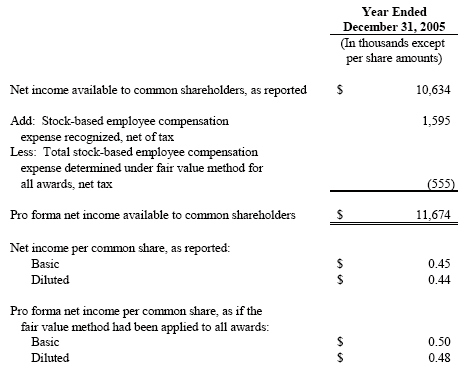
The following table sets forth pro forma
information for year ended December 31, 2005 as if stock-based compensation
cost had been consistent with the requirements of the SFAS No. 123,
“Accounting for Stock-based Compensation”:
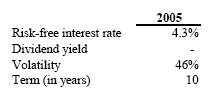
During 2005, the Company granted options
with a weighted average grant-date fair value of $5.88 per option,
based on the following assumptions:
Restricted Stock. The Company
grants shares of restricted stock and records deferred compensation
based on the closing price of the Company’s stock on the grant
date. The deferred compensation is amortized to stock-based compensation
expense ratably over the vesting period of the restricted shares
(generally one to three years), using either the straight-line or
graded vestingmethod as prescribed in SFAS 123(R).
|